January 2, 2016
As I’m sure is true for most hams, since I was first licensed, I’ve dreamed of huge gain at huge elevation (above ground). Imagination pushed the bounds of what’s possible… maybe a local replica of the epic Radio Arcala OH8X 160m beam? A flex mounted way up the tower with WiFi and AC power for remote access?
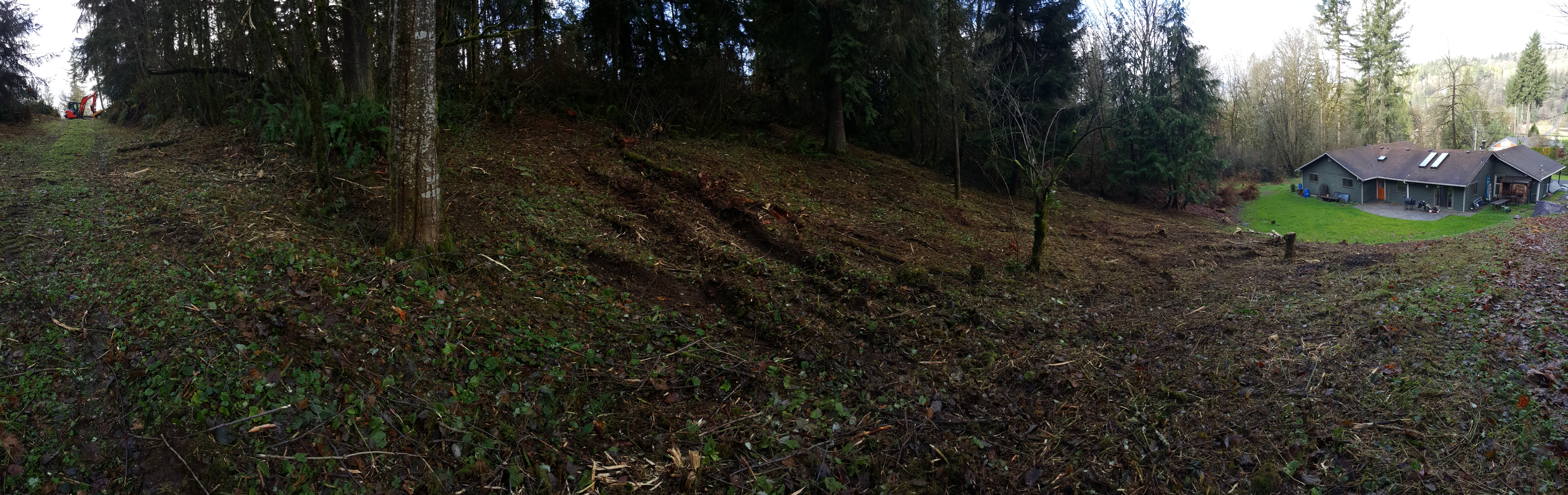
In November of 2014, I bought a Trylon T200-80, 80′ self supporting triangular tower from KZ1W. In May of 2015, my friend Jean (KG7NJQ) and I picked it up from Grant’s place. I added 4 more sections to it from AG7N and had illusions of gain at elevation… life took over and I’ve basically not gotten around to it. Fast forward to mid-December and I finally got around to clearing some land (pics attached). I realized I had lots of options for where to put the antenna.
Read More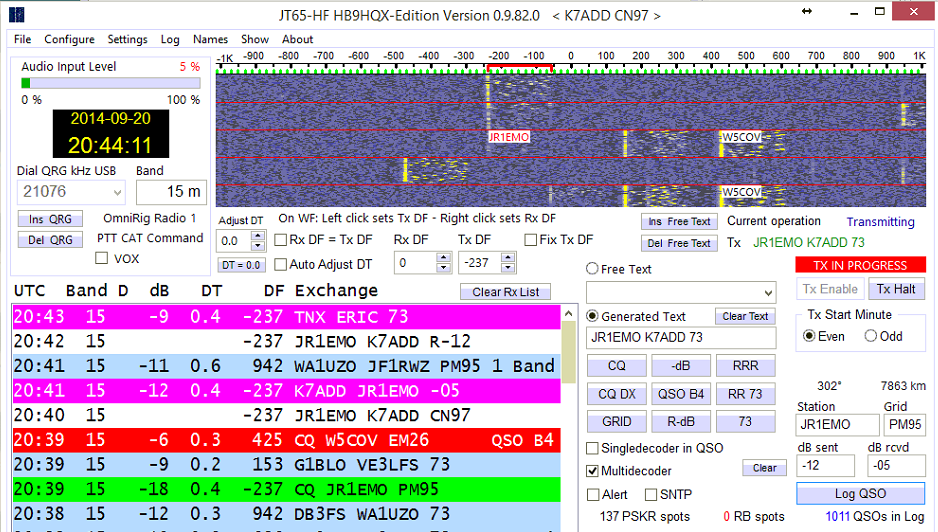
September 20, 2014
I just worked JR1EMOon 15m JT65. Working Japan from here isn’t terribly notable. This one was. Why? Because JR1EMO was my first HF contact 15 months ago.
June 27th of last year, right after I got my General ticket, I transmitted on HF for the first time after JR1EMO called CQ on 20m PSK31 (14.070). I fumbled around to figure out what macros went when, how to make itstoptransmitting, and then did a victory lap around the garage-shack.
Read More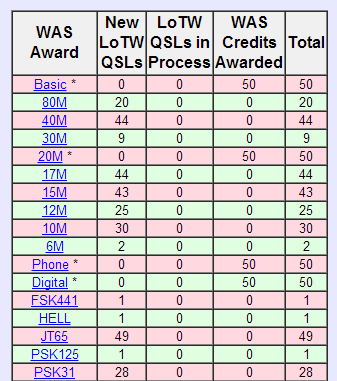
August 21, 2014
As I said back in April, I hadn’t planned on becoming a paper chaser. Now that I’ve started to track my “accomplishments,” it’s become kind of fun to chase the states I’m missing. I’d already gotten hooked on chasing DX and had been tracking the unique entities I’d contacted, but recently I’ve been paying attention to domestic contacts, too.
In the past four months, I’ve been awarded mixed phone and mixed digital and I’m much closer on several band-specific and mode-specific awards. I’ve got all 50 (but haven’t applied for the award) on 20m phone and I’m only missing Idaho on both 20m digitalandfor mixed JT65. Aside from Idaho, I need Hawaii, Mississippi, New Hampshire, and New Mexico on 20m JT65. Theoretically, the right five LoTW confirmed contacts and I can apply for 5 more WAS awards.
Read MoreAugust 18, 2014
What follows is an email I sent to the DX Awards Committee representative for the Northwest. This is largely in response to the July DXAC committee report.
First, thank you so much for your service to this region. I also really appreciate the ARRL and all it does for all aspects of he hobby of amateur radio.
In short, I am largely in support of the spirit of the DXAC’s recommendations (section 1.9 in the July committee report). I believe additional clarifications are needed, in order to make this understood by the amateur radio community.
Read More
August 17, 2014
Having prior plans for travel to India, I didn’t expect to have the opportunity to participate in the North American QSO Party (NAQP) Single Sideband contest.
Fortunately(?), I picked up a nasty cold a week ago and have been fighting it since. The doc prescribed some antibiotics and suggested that I shouldn’t travel, if I could avoid it. I spent the day out and about, at the Groundspeak Geocaching Block Party. When I realized I wasn’t travelling, I snuck over to the home station and got on the air for a few.
Read More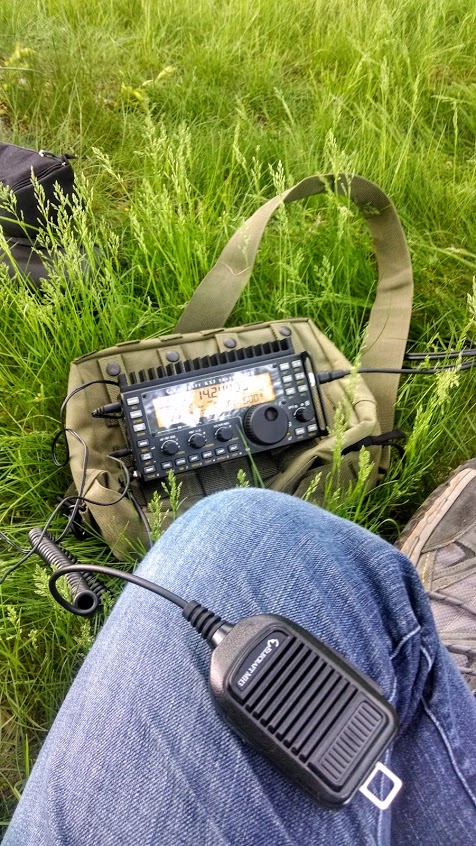
May 14, 2014
I’m visiting my team in Cambridge, MA and brought the KX3 with me. Yesterday, Tuesday evening, I managed to sneak down to an area near the St. Charles river around 7pm Eastern (2300z) and set up on the grass.
Portable QRP Ops
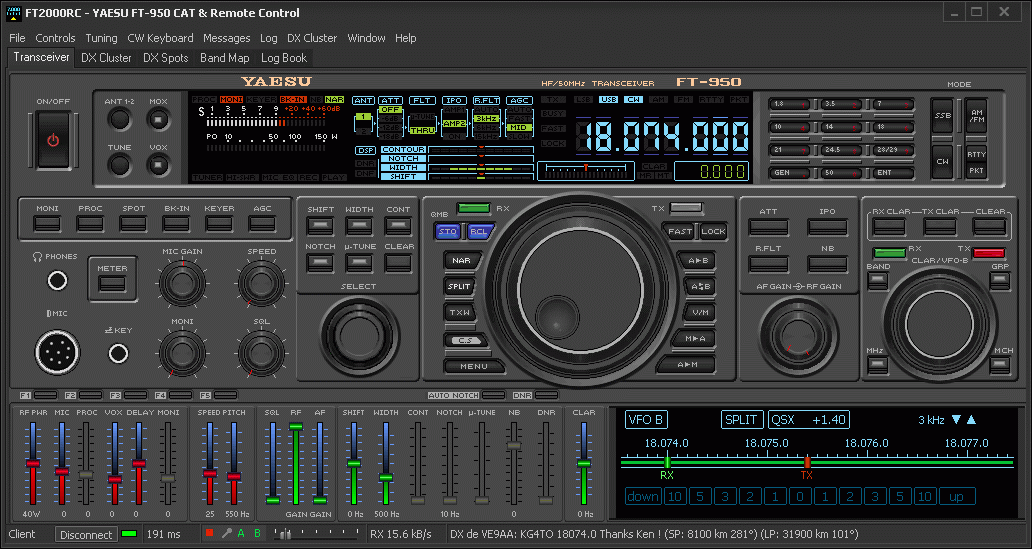
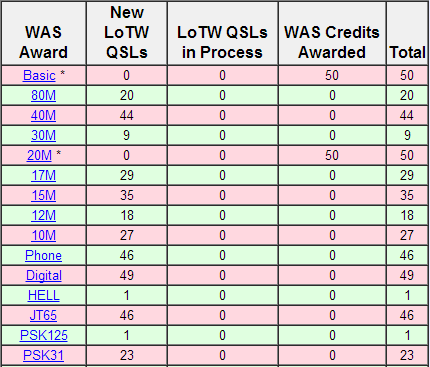
I managed to forget the USB soundcard, so I was working phone, only. It was a great opportunity to test out my new batteries,voltage regulator, and EARCHI end-fed half-wave antenna. The battery (5500mAh LiPo pack) performed tremendously and I’m pretty sure I didn’t put a dent in it with the 45 minutes I was QRV. The voltage regulator (another post) worked perfectly, but needs to be ‘ruggedized’ before I’m confident that it’ll do in less favorable conditions. The EARCHI end-fed half-wave antenna wasperfectand didn’t really even need the built in ATU in the KX3. Conditions were quite good and I was able to make a couple short contacts. Got a 57 from a 5-lander in eastern Texas and a 55 from Ohio before the wind and cold got to me. Maybe the YL will be up for a walk and chilling by the water, after she arrives, tonight. I’ve also been playing with software for remote operations and may have found the ideal hotel setup. While travelling, I find myself with downtime and can’t always take a rig with me. While I do intend to get a VU3 license for India, travel to China means I can’t take a radio with me (let alone use it!). I’ve found that remotely controlling my home station can scratch that itch. I’d previously used a combination of Teamviewerto Ham Radio Deluxeand the Remotehams.com RCForbclient/server. This was a bit of a hack, but mostly kinda worked.DF3CBhas produced FT2000RC, a client/server package for remote operation of the FT-2000, FT-950, and FTDX-5000. It back hauls CAT control, as well as bi-directional audio.
April 25, 2014
[update 4/25: I’m now WAS with an endorsement for 20m. LoTW was update this AM with a little next to Basic and 20m. All this for those little asterisks below.]
I just applied for the ARRL Basic Worked All States (WAS), 20m WAS, DX Century Club – Mixed, and DX Century Club – Phone. I’m a handful of states away on several other WAS awards, listed behind the break. I honestly hadn’t considered applying for them, but when the Logbook of the World (LoTW) page says “50 states”, it’s hard to resist.
Read More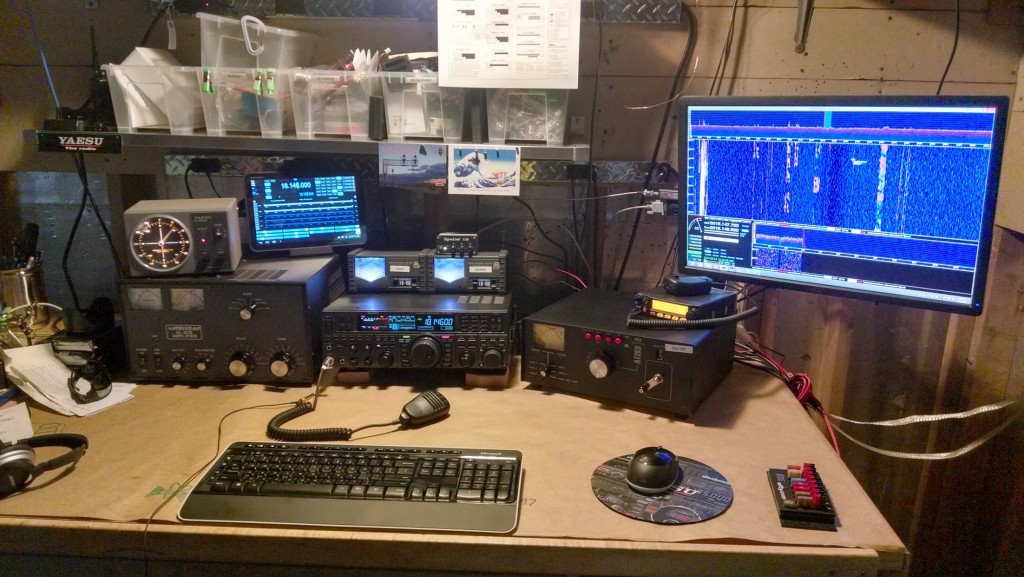
April 24, 2014
This last Sunday, I participated in the ARRL Rookie Roundup Contest. tl,dr; Results first:
37 rookies @ 2 points each, 122 non-rookies @ 1 point each (74+122) = 196 QSO Points 41 states, 4 VE provinces/territories, 1 DX for (46 Multipliers) = Total Score of 9,016
I’ve made contest contacts before, but I’ve opted to give points to the participants instead of attempting to rack up the points myself. Contests are often a good opportunity to hunt DX, as some hams have vacation places in remote or not-oft-heard DXCC entities. I’ve also just enjoyed making a handful of contacts over a short period of time and helping out those participating. Having paid a little attention to “radiosport” and the resultant scores for big contests (CQ WW, ARRL DX, et al.), I quickly realized that to be*competitive,you had to take itseriously.*Contest stations are among the most impressive on the air, often with huge towers, legal limit amplifiers, and stacked yagis. These mega stations are purpose-built and well suited for the job. The contesters themselves are incredibly skilled operators, able to pick out callsigns and exchanges out of the fog of a pileup and the most painful of QSB. When I ran across the ARRL Rookie Roundup Contest page, in November, I immediately decided immediately to compete. The number of QSOs submitted for previous years seemed like they were within reach from my meager station and my noob skills. The number of participants is limited (12 in 2013) and, by very definition of the contest, roughly the same amount of experience. “I can do this one!”
Read MoreApril 24, 2014
As much as I’ve been enjoying the W1AW portable stations,I’ve been dismayed by the pileup behavior of some of the hams calling. As a new ham,Iassumedthat most would be well-behaved,but I’ve been proved wrong more than once. When trying to work /2 (New Jersey), the RTTY op did a fantastic job of keeping the contacts rolling and making it clear when and where to call. I was impressed enough to add a little personal note to my exchange.
Read MoreApril 22, 2014
This last Sunday, I participated in the ARRL Rookie Roundup Contest. tl,dr; Results first:
37 rookies @ 2 points each, 122 non-rookies @ 1 point each (74+122) = 196 QSO Points 41 states, 4 VE provinces/territories, 1 DX for (46 Multipliers) = Total Score of 9,016
I’ve made contest contacts before, but I’ve opted to give points to the participants instead of attempting to rack up the points myself. Contests are often a good opportunity to hunt DX, as some hams have vacation places in remote or not-oft-heard DXCC entities. I’ve also just enjoyed making a handful of contacts over a short period of time and helping out those participating. Having paid a little attention to “radiosport” and the resultant scores for big contests (CQ WW, ARRL DX, et al.), I quickly realized that to be*competitive,you had to take itseriously.*Contest stations are among the most impressive on the air, often with huge towers, legal limit amplifiers, and stacked yagis. These mega stations are purpose-built and well suited for the job. The contesters themselves are incredibly skilled operators, able to pick out callsigns and exchanges out of the fog of a pileup and the most painful of QSB. When I ran across the ARRL Rookie Roundup Contest page, in November, I immediately decided immediately to compete. The number of QSOs submitted for previous years seemed like they were within reach from my meager station and my noob skills. The number of participants is limited (12 in 2013) and, by very definition of the contest, roughly the same amount of experience. “I can do this one!”
Read More